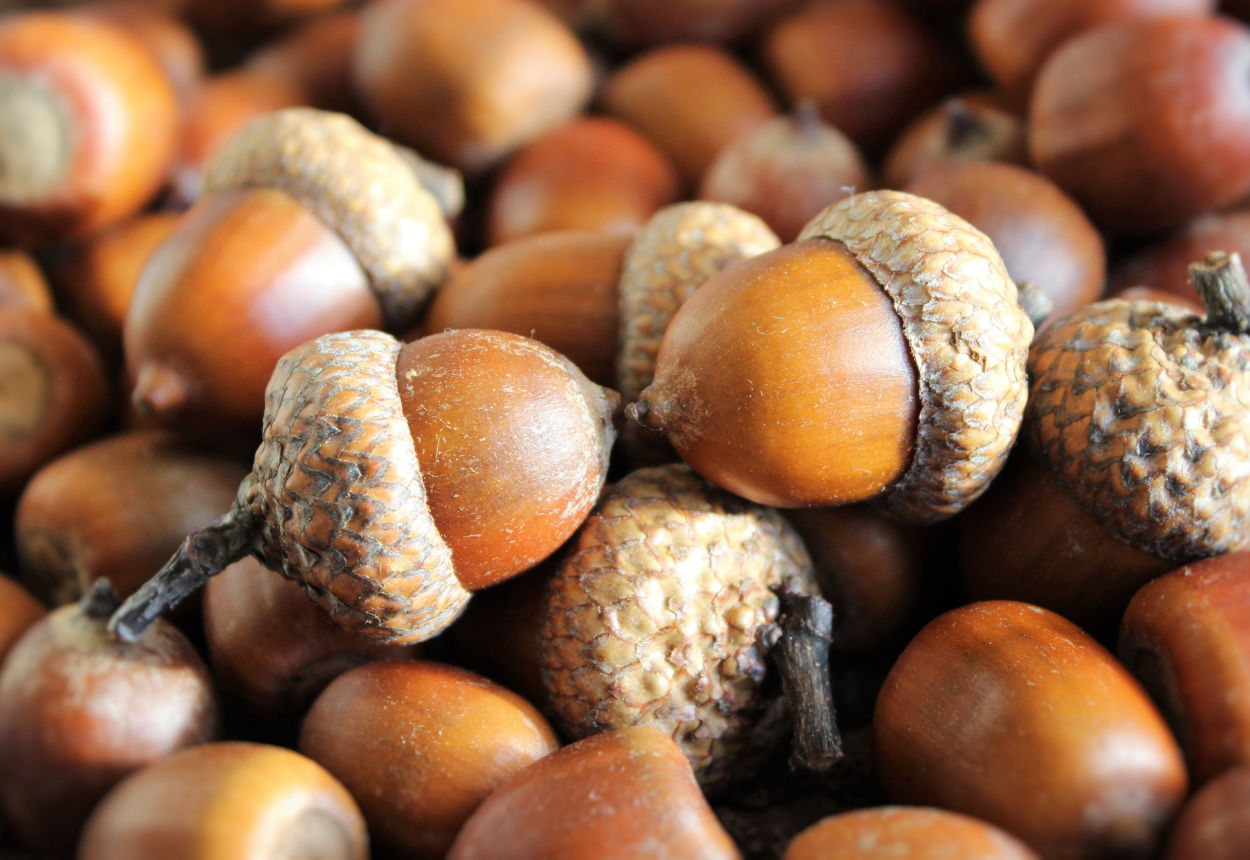
Dotori - 도토리
Acorns
Acorns are used mostly to make acorn starch/powder/flour, which is then made into acorn jelly or acorn noodles.[1]
Since ancient times, acorns, specifically from oak trees, have been a major source of food throughout Asia, Europe, and the Americas. In Korea, acorns are used to make a dish known as Dotori-muk, which is also called acorn jelly. Traditionally, Dotori-muk was made in mountainous areas of ancient Korea, where abundant oak trees produced enough acorns to make it a viable food source in the fall.
Due to tannins and other polyphenols, acorns cannot be easily digested despite being a good source of starch and proteins. Therefore, before consuming harvested acorns, it is necessary to remove the tannins through a leaching process. This involves grinding the nutmeat into a paste and stirring it in water. The starch is separated from the fiber using sieves and the mixture is allowed to settle multiple times to diffuse the tannins into the water. Once the starch-water mixture is clear of tannins, it is drained and dried before being packaged for sale.[2]
On a menu: Anything beginning with dotori will have acorn as a main ingredient.
Used in:
Dotori-muk: Acorn Jelly
Dotori-garu: Acorn flour
Dotori-muk bap: Acorn jelly mixed rice
Dotori-guksu: Acorn flour noodles
Dotori-tteok: A Korean rice cake including acorn
Article by Gil "hannaone"
© Copyright 2024. All rights reserved.
Image from Pixabay: Acorns
Source:
1 Korean Food Guide in English
2. hannaone